
Understanding Isoxazolines: Seperating Fact From Fiction
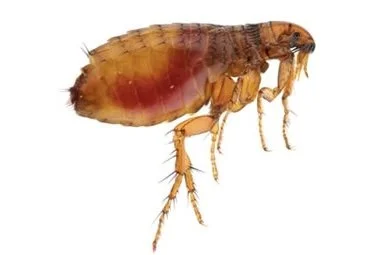
Over the past decade, isoxazolines (Bravecto®, NexGard®, Credelio® and others) have become one of the most significant advances in veterinary parasite control. These prescription medications are highly effective against fleas, ticks and several important mites affecting dogs and cats.
In veterinary dermatology, however, their importance extends far beyond routine parasite prevention.
One of the first recommendations during a dermatology consultation is to keep pets on year-round isoxazoline therapy. This often raises the question:
“Why does my dog need flea prevention when I’ve never seen a flea?”
The answer lies in understanding how allergic skin disease develops.
Many dogs with allergic skin disease have a defective epidermal (skin) barrier. Healthy skin acts as a protective shield, preventing allergens, parasites, bacteria and environmental irritants from penetrating while helping to retain moisture. In allergic patients, this barrier becomes weakened, allowing triggers to enter the skin more easily and perpetuate disease.
For these patients, even minimal flea exposure may be enough to trigger intense itching, skin inflammation and secondary infections. Eliminating flea bites removes one important source of inflammation and allows us to investigate and manage the remaining causes of skin disease more accurately.
Despite their widespread use and excellent safety profile, several myths about isoxazolines continue to circulate online and through word of mouth. Let’s examine what the evidence actually tells us.
Myth 1: Isoxazolines Cause Kidney Failure
There is currently no scientific evidence demonstrating that approved isoxazolines cause chronic kidney disease or kidney failure in dogs or cats.
These medications underwent extensive safety testing before licensing and continue to be monitored through post-marketing surveillance programmes worldwide. While any medication has the potential to cause adverse reactions in individual patients, kidney failure is not recognised as a common or expected consequence of isoxazoline use.
Kidney disease is unfortunately common in ageing pets. Because millions of animals receive parasite prevention every year, some will inevitably develop kidney disease while receiving these medications. This association does not mean the medication caused the disease.
Myth 2: Isoxazolines Cause Cancer
Another common claim is that isoxazolines cause cancer.
At present, there is no scientific evidence establishing a causal relationship between isoxazoline and the development of cancer in dogs or cats. Interestingly, researchers in human medicine are actively investigating compounds based on the isoxazoline chemical structure for their potential use as anticancer therapies.
Cancer is one of the most common diseases affecting older pets. As with kidney disease, coincidence should not be confused with causation. Veterinary recommendations should be guided by published scientific evidence rather than anecdotal reports or social media claims.
Myth 3: They Should Only Be Given When Fleas Are Seen
Another common misconceptions is that flea prevention is only necessary when fleas are visible.
In reality, pets can have significant flea exposure without owners ever seeing a flea. Fleas spend much of their life cycle in the environment, and many dogs remove evidence of infestation through grooming.
For allergic patients, this is particularly important.
Flea allergy dermatitis remains one of the most common causes of itching in dogs. Even a single flea bite may be enough to trigger days of significant inflammation in a sensitised animal.
From a dermatology perspective, year-round parasite control serves another important purpose. Many skin diseases, can look remarkably similar. Before diagnosing chronic allergic skin disease, veterinary dermatologists must first rule out parasites.
Maintaining consistent parasite control removes one major inflammatory trigger and allows the diagnostic investigation to focus on other underlying causes.
Myth 4: Tablets Can Be Split in Half
Isoxazolines are prescription medications designed to deliver a specific dose range according to body weight. Splitting tablets may result in inaccurate dosing, potentially reducing effectiveness or increasing the risk of adverse effects.
Not all products are licensed to be divided, and not all chewable tablets are manufactured to ensure an even distribution of the active ingredient. While the flavourings and inactive ingredients make these medications highly palatable, the active ingredient may not be evenly distributed in each portion once the tablet is split. This means one half may contain more medication than intended, while the other contains less, resulting in unpredictable dosing.
For households treating multiple pets, this could potentially mean one animal receives a higher-than-intended dose while another receives an insufficient dose, reducing the effectiveness of parasite control.
The safest and most reliable approach is to administer the product exactly as directed on the manufacturer’s label.
Myth 5: If My Pet Has No Fleas, They Don’t Need Treatment
The absence of visible fleas does not mean the absence of parasites.
Many infestations go unnoticed, particularly in animals that groom frequently or spend most of their time indoors. Pets may become exposed through other animals, wildlife or contaminated environments.
Another common misconception is that flea and tick preventatives continue working well beyond the recommended dosing interval. As a result, some owners delay giving the next dose because they have not seen any fleas.
In reality, isoxazolines are licensed to provide protection for a specific period of time based on extensive scientific testing. As time passes, the concentration of the medication within the body gradually declines. Beyond the recommended dosing interval, there is no guarantee that drug levels remain high enough to provide consistent protection.
One of the fundamental principles of veterinary dermatology is to systematically eliminate potential causes of itching before diagnosing chronic allergic disease. Consistent, year-round parasite control, administered according to the manufacturer’s recommended dosing schedule, is an essential part of that process. Delaying or missing doses can reintroduce parasites as a potential cause of disease and complicate the investigation of chronic skin conditions.
The Bottom Line
For many dermatology patients, isoxazolines form an essential part of the diagnostic process. By eliminating fleas and several important mite infestations, these medications remove avoidable inflammatory triggers and help ensure that conditions such as food allergy, environmental allergy and autoimmune skin disease can be investigated accurately.
The goal is not to prescribe medication unnecessarily, but to use evidence-based medicine to give every patient the best opportunity for an accurate diagnosis and successful long-term management.
The internet has made pet health information more accessible than ever before. Unfortunately, it has also made misinformation easier to spread. When evaluating claims about any medication, owners should look to peer-reviewed scientific evidence, veterinary professionals and regulatory authorities rather than isolated anecdotes or social media posts.
DermaVet TT
May 2026
References
Beugnet, F. and Franc, M. (2012) ‘Insecticide and acaricide molecules and/or combinations to prevent pet infestation by ectoparasites’, Trends in Parasitology, 28(7), pp. 267–279.
Companion Animal Parasite Council (2023) Ticks.
European Medicines Agency (2025) Fluralaner Intervet: EPAR – Product Information. Available at: https://www.ema.europa.eu/en/medicines/veterinary/EPAR/fluralaner-intervet
European Scientific Counsel Companion Animal Parasites (2022) GL3: Control of Ectoparasites in Dogs and Cats.7th edn. Malmesbury: ESCCAP.
Majirská, M. et al. (2024) 'Targeting hematological malignancies with isoxazole derivatives', Drug Discovery Today, 29(8)
Marchiondo, A.A., et al. (2013) ‘World Association for the Advancement of Veterinary Parasitology (WAAVP) second edition’, Veterinary Parasitology, 194(1), pp. 84–97. doi:10.1016/j.vetpar.2013.02.003.
Olivry, T., Mueller, R.S. and Prélaud, P. (2015) ‘Critically appraised topic on adverse food reactions of companion animals (1): duration of elimination diets’, BMC Veterinary Research, 11(225), pp. 1–5.
Olivry, T. et al. (2023) ‘Treatment of canine atopic dermatitis: 2023 updated guidelines from the International Committee on Allergic Diseases of Animals (ICADA)’, Veterinary Dermatology, 34(5), pp. 359–401.
Santoro, D., Marsella, R., Pucheu-Haston, C.M. and Eisenschenk, M.N.C. (2015) ‘Review: Pathogenesis of canine atopic dermatitis: skin barrier and host–micro-organism interaction’, Veterinary Dermatology, 26(2), pp. 84–e25.
U.S. Food and Drug Administration (2023) Fact Sheet for Pet Owners and Veterinarians About Potential Adverse Events Associated with Isoxazoline Flea and Tick Products.